尸兄
China accelerates LEO satellite deployment with two launches in 12 days, but gap remains in launchpad efficiency, rocket reusability: expert_我的网站

一 |
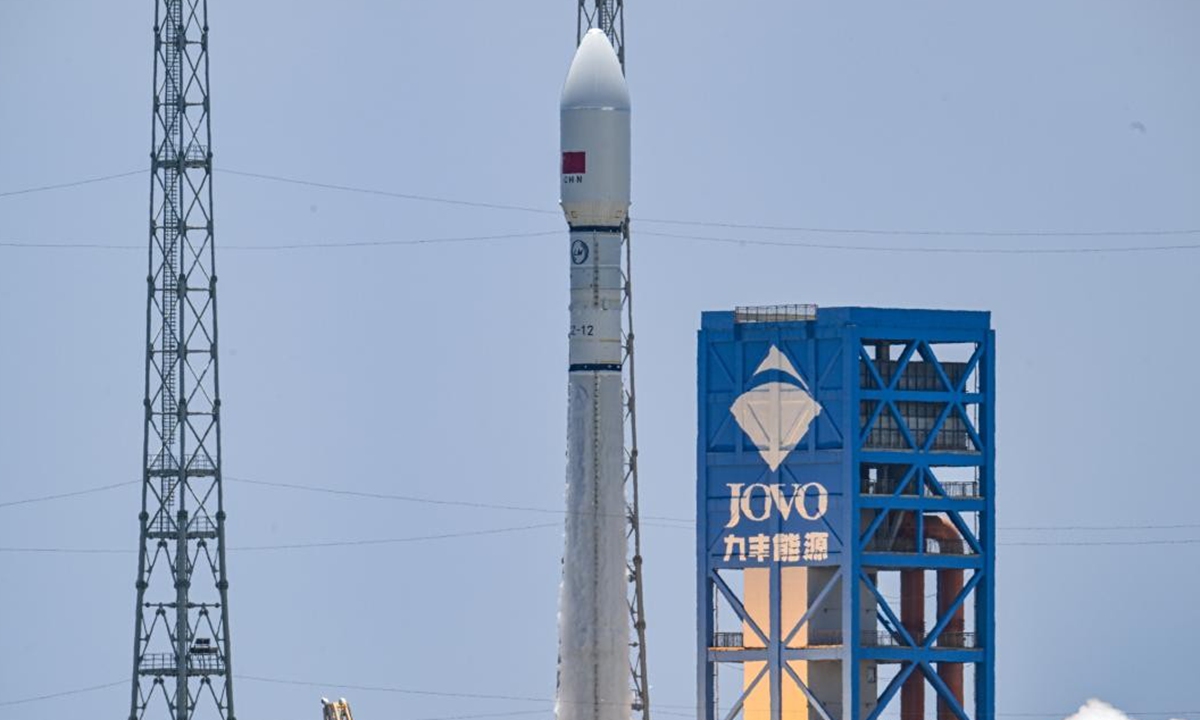
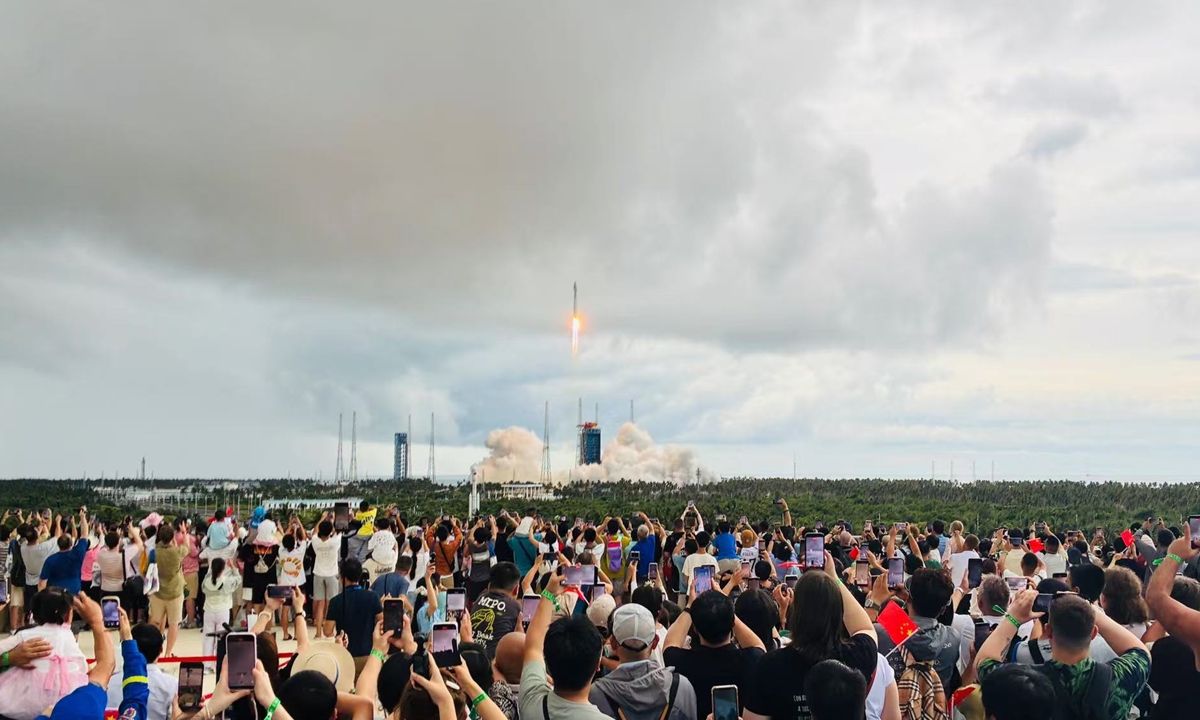
Two successful launches among China's recent frequent moves caught particular attention of space watchers - the 24th group of low-Earth orbit internet (LEO) satellites aboard a Long March-12 rocket was sent from a commercial spacecraft launch site in the southern island province of Hainan on Sunday, 12 days after the 23rd group of LEO satellites aboard a Long March-8A rocket was launched from the same Hainan site on August 4.
Sunday's mission marked the 663rd launch of the Long March series of carrier rockets, which on Monday sent an SEO satellite into preset orbit, per Xinhua.
Experts said the launches of two groups of LEO satellites within 12 days underlined that China is notably accelerating its pace of building its satellite internet constellation.
"The launch of LEO satellites has now entered a regular and cyclical rhythm, with batches of satellites continuously being sent into orbit at relatively stable intervals," Kang Guohua, a senior member of the Chinese Society of Astronautics and a professor of Aerospace Engineering at Nanjing University of Aeronautics and Astronautics, told the Global Times on Monday.
China launched the first group of LEO internet satellites on December 16, 2024, proceeding to the 24th batch in about 20 months. Kang said three major production and launch "assembly lines" are supporting the effort: satellite factories featuring centralized design in Beijing, coordinated supply chains and mass production; rockets with streamlined launch and testing procedures and multiple configurations; and launch sites capable of supporting routine constellation deployment.
The Long March-12, which played a key role in the latest LEO satellite launch, is China's first 4-meter-class single-core-stage carrier rocket and was specifically developed for commercial launch needs. It is about 62.6 meters long, has a liftoff mass of 430 tons and can carry more than 12 tons to low-Earth orbit. Its first stage is equipped with four 1,250-kilonewton pump-fed liquid oxygen-kerosene engines and uses a newly developed coal-based aerospace kerosene, according to Shanghai Academy of Spaceflight Technology.
The rocket adopts a "three-horizontal" launch preparation model: horizontal assembly, horizontal testing and horizontal transportation. Depending on mission requirements, it can use fairings with diameters of 4.2 or 5.2 meters and support both single-satellite and multi-satellite launches into different orbits.
"This flexibility makes the Long March-12 particularly suitable for the 'one rocket, multiple satellites' model required for constellation deployment, making it one of the main launch vehicles currently used for LEO constellation missions," Kang said.
The mission also highlighted the launch site's growing ability to support high-frequency launches. The rocket took only two and a half days from being transported to the launch area to liftoff, setting a record for the shortest time a rocket occupied the launch position at the site, Kang said.
Despite the rapid progress, experts cautioned that the 228 satellites currently in orbit remain some distance from the ultimate goal. China's satellite internet project has a long-term goal of deploying nearly 8,000 satellites and is now in an accelerated "weaving" phase.
China's advantage lies in its ability to control costs and boost production efficiency once satellite manufacturing reaches mass-production scale, another expert surnamed Liu told the Global Times.
"Whether it is the production capacity of AI centers or the factory in Hainan, which has an annual satellite manufacturing capacity of 1,000 units, satellite production itself is not the problem," Liu said. "More bottlenecks lie in the operational efficiency of launch pads and the rocket payload and recovery technology."
The real challenge lies in rocket reusability. Only by lowering launch costs and increasing launch frequency can China sustain a pace of more than one launch per week. This is also the strategic significance of accelerating the development of reusable rocket technology, including the Long March-10B and privately developed rockets, Kang further noted.
Chinese Academy of Engineering academician Deng Zhongliang previously said in an interview that satellite internet will serve as an indispensable space-time infrastructure for 6G, enabling emerging industries worth trillions of yuan, including the low-altitude economy, advanced autonomous driving and the Internet of Things (IoT).
。 如今,素面鸭形陶尊还被做成了文创产品——“大肚鸭”圆滚滚的萌态,萌翻一众游客
来源:邯郸晚报01处暑为什么吃鸭呢?处暑作为天气由热转凉的交替时期,雨量逐渐减少,且秋季以燥为主气,人们普遍会感到皮肤、口鼻干燥。鸭子味甘、性凉,具有滋阴补虚、除骨蒸劳热、消肿止痢、止咳化痰等功效,尤其是老鸭(两年及两年以上的鸭子),补而不燥,是秋季进补的常备食材。在民间有处暑吃鸭子的习俗,各地区做法也五花八门,如烤鸭、子姜鸭、白切鸭、核桃鸭、柠檬鸭、荷叶鸭等。北京至今还保留着这一民俗,到了处暑这一天,全家人一起吃烤鸭,迎接“秋老虎”。不止邯郸,博物院还珍藏着一件与“鸭”有关的精巧之作——唐邢窑三彩鸭形杯
图片来源:博物院它长12厘米、高7厘米,出土于邢窑。杯的造型为一只体态丰满的鸭子,鸭回首伸颈,口衔荷叶形杯口,椭圆形鸭腹即杯身,腹内中空,鸭子双翅展开,作游水状。胎质坚硬致密,上施黄,绿,褐三色彩。杯的造型生动逼真,栩栩如生。

二 | 这两只“鸭子”虽不能下锅却以另一种方式替先人守住了这个节气与鸭的古老默契02除了“小鸭子”,还有哪件宝物和处暑有关呢?处暑三候:一候鹰乃祭鸟,二候天地始肃,三候禾乃登。

三 | 暑气渐消,万物走向成熟,丰收已近在眼前。鸭子是处暑的味道而秋的丰饶则刻在另一件国宝里——西汉透雕双龙高钮谷纹白玉璧
图片来源:博物院它1968年出土于满城中山靖王刘胜墓,玉璧两面都雕有细密的谷纹,形态像一颗颗饱满的谷粒。“谷纹”本身就是丰收的象征,寄托着“五谷丰登、天下富饶”的美好祈愿。可以说,这件玉璧是古人将丰收愿望“刻”进玉器里的完美体现。03处暑时节,应该如何养生?“春捂秋冻”要适度处暑时节适当“秋冻”可以增强免疫力,增强耐寒能力,促进心血管功能。

四 | 但“秋冻”并不是盲目冻,应当“该捂捂、该冻冻”。捂肩部,在这个时间段,要穿着一些盖住肩部的衣物,不要只穿背心等衣服。

五 | 捂腰腹,这个时节要护住腰腹,减少穿着露脐装。尤其老年人要更加注意腰腹部位的保护。当昼夜温差大于8℃以上时,说明气温不稳定,需要“捂”;当气温连续保持在15℃以上,且维持了一两周时,就可以适当减少衣物。别乱贴秋膘进入初秋,食欲逐渐好转,贴秋膘可以为应对秋冬的寒冷储存能量。但是,处暑节气人的胃肠功能较弱,食用太多肉类等高蛋白食品,会加重胃肠负担,影响胃肠功能。可适当多食用滋阴润肺的食物,如蜂蜜、银耳、百合、芝麻、牛奶、鸭肉、莲藕、荸荠、甘蔗等;适当增加酸涩之性的水果,如雪梨、石榴、柚子、柠檬等。暑尽秋来愿你在这个美好的时节把小小欢喜、大大收获,通通抱满怀(部分画面由AI生成)编 辑丨李硕视 觉丨李默森资料来源丨综合自博物院、邯郸博物馆微信公众号、央视一套、央视少儿、中国中医药报、视觉中国。
Current article:http://aqb418p.zongchaeiwengshuabaisisuofu.sbs/9c7rly/20260826/8397996.html
Published on:02:07:17


