
黑色幽默
Chinese real estate entrepreneur wins Korean literary award, ‘atypical writer’ turns Everest experiences into literature_我的网站

A |
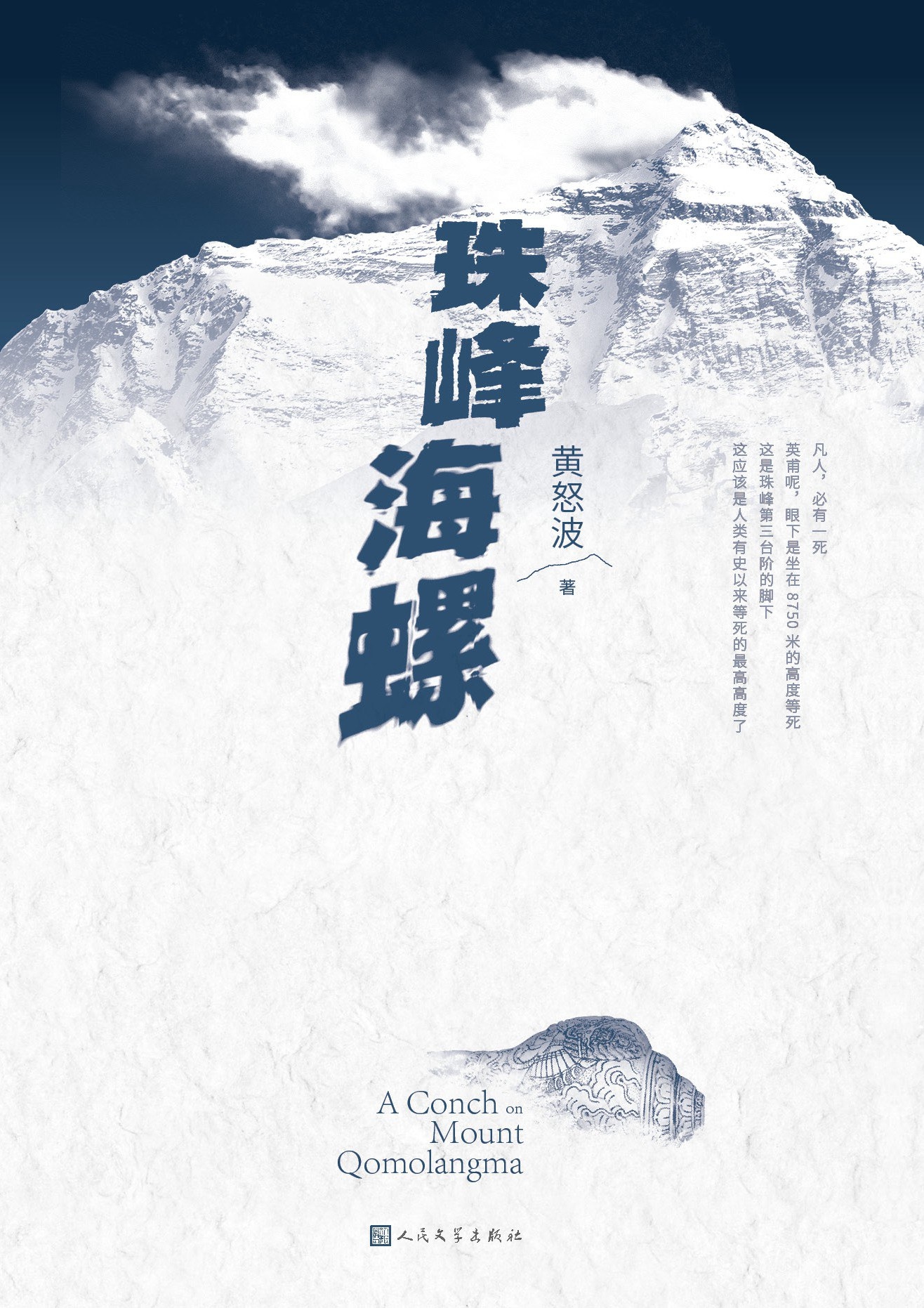
Chinese real estate entrepreneur and writer Huang Nubo's novel A Conch on Mount Qomolangma has won the top prize at the 19th Lee Byung-ju Hadong International Literary Award in South Korea, organizers announced Friday. The organizers said the novel demonstrates the author's extensive knowledge, literary depth and philosophical insight, while exploring human limitations and the direction of life in ways that resonate with readers, according to South Korean media Yonhap News Agency.
The novel follows two parallel storylines - an expedition to Mount Everest and a business crisis, while Huang himself has reached the summit of Everest three times.
Huang told the Global Times that more than half of the world's mountains above 8,000 meters are located in China. China previously had no developed mountaineering industry, but mountaineers from Southwest China's Xizang Autonomous Region have since become a strong presence on the international climbing scene, with one Xizang guide having climbed Everest as many as 12 times. Some guides have also gone on to become national ski coaches.
These changes are also reflected in the novel, in which Huang uses the world of mountaineering not only as a setting for the story, but also as a window into the people living and working in the mountains and the changes taking place around them.
"Xizang guides are also very sincere and dependable. They never abandon you or leave you behind," Huang said. For Huang, climbing Everest goes beyond reaching the summit, prompting reflection on the people he encountered, the changes he witnessed and the relationship between humanity and nature.
The "conch" in the novel's title takes these reflections from the summit of Everest into a much longer time scale. Huang explained that Everest represents "space," while the conch represents "time" - Everest was once beneath the sea, while the conch has witnessed the long evolution of life. Together, they point to human existence across time and space.

For Zhang Jiwu, professor of Chinese language and literature at Peking University, Huang himself is an unusual literary figure.
"This award winner previously worked in real estate, yet he has produced a literary work with such strong appeal and reach," Zhang told the Global Times. "His cross-disciplinary knowledge and life experience mean that the novel is not built solely on literary imagination, but is grounded in real-life experience."
That identity as an "atypical writer" is one of the aspects that makes A Conch on Mount Qomolangma noteworthy.
People believe the novel incorporates "new realities" of modern society, including mountaineering and business competition, into its literary narrative, reflecting changes in China's economic development and social life. These experiences have provided unique material and perspectives for his literary expression, according to the China Writers Association.
This reflection on life, time and the human condition may also help explain why A Conch on Mount Qomolangma has resonated beyond China. In Zhang's view, the significance of an overseas literary award lies not only in bringing greater international attention to a Chinese work, but also in allowing readers from different cultural backgrounds to encounter, through literature, Chinese writers' reflections on questions shared by humanity.
。 Amel Safi did not say goodbye to her brothers before she fled Gaza because it would have made it harder to leave, the 22-year-old Palestinian told ABC News.Following Israel's warning to evacuate northern Gaza Friday ahead of a potential ground incursion, Safi said her mother came to her and asked her to pack her "most precious" items in a small bag and the women in her family went to Khan Yunis, a city in the southern Gaza Strip, while the men stayed behind."I was crying from the moment that my mum told me I have to prepare my bag. I feel like I couldn't talk with my brothers because I'm going to cry more," Safi told ABC News in a Zoom interview on Friday. "I don't want to see them because I know if I have seen them, I would cry more.""I don't like even my enemy to experience such a thing," she added.Safi said she and her family have been living in fear amid Israeli airstrikes retaliating for Hamas' brutal surprise attack last weekend. As of Sunday, at least 2,670 people have been killed and an estimated 9,600 more injured in the strikes in Gaza, according to the Palestinian Ministry of Health."Every single night, every single moment, we are afraid to be bombed, to be killed," Safi said.The Israeli military early Friday told all residents north of Wadi Gaza -- 1.1 million people -- to evacuate their homes within 24 hours and move south. Safi said her family wasn't sure what to do following the notice. Ultimately, the men in her family decided to stay while the women and her youngest brother went to Khan Yunis, where they hoped they would be safer, Safi said."A house that my father built, like he did everything to build, and he tried his best to give us a place to feel safe -- everything in a moment, we may lose it," Safi said. "We are very afraid and we are very sad. I couldn't believe the situation. I couldn't believe it. I feel like, okay, am I dreaming? Am I in a nightmare?"Safi said she's staying at a place in Khan Yunis with between 12 to 15 people. Friends of her siblings asked if they could stay with them but they didn't have enough room. Other evacuees are having trouble finding places to stay and many are sleeping on the streets, she said."You can see women holding their children and they're crying over them," she said. "They can't feed them. They can't find a place to feel safe."They brought food with them, but Safi said the shelves at supermarkets near them are nearly empty."Even if you have the money, you wouldn't be able to buy the things that you really need," she said.In the wake of the evacuation notice, the Israel Defense Forces said Saturday they plan to implement a wide-ranging offensive, including "significant ground operations," and will "broadly attack Gaza City very soon."With her family now separated amid the raging conflict, Safi said she hopes she will get to see her brothers and father again."I will never be able to forget what happened today. It's just a nightmare," she said. "I wish someone can come to me and wake me up."。

B |
Current article:http://aqb418p.zongchaeiwengshuabaisisuofu.sbs/ksnixe/vkm.html
Published on:04:45:11
男女纠察队_Random reading
- 08-21Baltimore firefighter dies and 4 others are injured battling rowhouse fire
- 08-20红米红米注7官方照片样本
- 08-22津媒:津门虎教练组表扬球队表现,主场战西海岸需先做好防守
- 08-20望海满族乡:葡萄产业“亮晶晶”
- 08-25雷军谈红米独立:释放小米手机的负担,冲向中高端
- 08-21SL, 53 countries need debt relief
- 08-22队记:国王揭幕战客战快船 主场对勇士
- 08-2688岁老人的“临时女儿”——萧山公益陪诊师的“兜底”实践
- 08-23谷歌:新的数据中心预计将100%使用可再生能源
- 08-21St. Louis launches program to pay $500 a month to lower-income residents

wps_Active users
- 董宇辉等核心主播走后,东方甄选扭亏为盈,赚5.44亿
- Northwest China's Shaanxi establishes new rail hub with direct connections to Europe
- 拼多多上线Temu,要教美国人“砍一刀”?_Shein_商品种类
- 曝勇士用训练营合同招揽本西 或奔赴湾区试训
- 西湖区开展集体用餐 配送单位专项检查
- One dead, two missing after explosion in Shandong; suspected illegal storage of explosives investigated: local authority
- 我省已下达35亿元以旧换新补贴资金
- Major Chinese airlines introduce paid in-flight meal options
- 猛龙将巴恩斯看作争冠拼图 扮演争冠二当家角色
- 胡润中国品牌榜发布 三个厦门品牌上榜
- PM to unveil India made HTT-40 for IAF today
- 不延期!跟队记者:意大利杯半决赛次回合米兰德比如期进行
- 京东电器年1月12日收票指南:手机收票减少2019年,抢笔记本888元票
- 포항 바이오기업, 스위스 바이오텍 데이 참가 성과 이어져
- 省委理论学习中心组学习会召开
- 近七年湖人必登揭幕夜 老詹转会后无缘首日赛程
- 库里:巴特勒有应对关键时刻的诀窍 我若被包夹&他就能出很多机会
- 记者:加拉塔萨雷和莱奥就年薪1200万欧谈妥,仍在与AC米兰谈判
林中小屋_Hottest this week
- 08-21Shahid Kapoor opens up about his next with Vishal Bharadwaj’s Oh Romeo
- 08-20Google Chrome OS测试新的文件管理器:更像主流桌面
- 08-25Deep focus: Behind the booming 'handcrafted economy,' ordinary creators turn AI side projects into viable ventures
- 08-25한라산 등반 쓰러진 60대 해경 헬기 구조
- 08-22中央气象台发布暴雨、台风、强对流预警:今早至明天,山东、江西、福建、湖南、广西、广东、云南、陕西、山西、河北、天津等地有大到暴雨
- 08-20东风汽车宣布成立新公司 推进品牌/渠道持续优化
- 08-24[포토뉴스]김왕규 양구군수, 도청 국·과 방문해 지역 주요현안 건의
- 08-25余杭持续擦亮“朝露计划”品牌
- 黑色幽默 copyright
- Some of the content comes from the Internet. If you have any offence, please raise it.