
情妇
Chinese researchers identify target to develop depression drug using traditional ethnic medicine in Yunnan_我的网站

A |
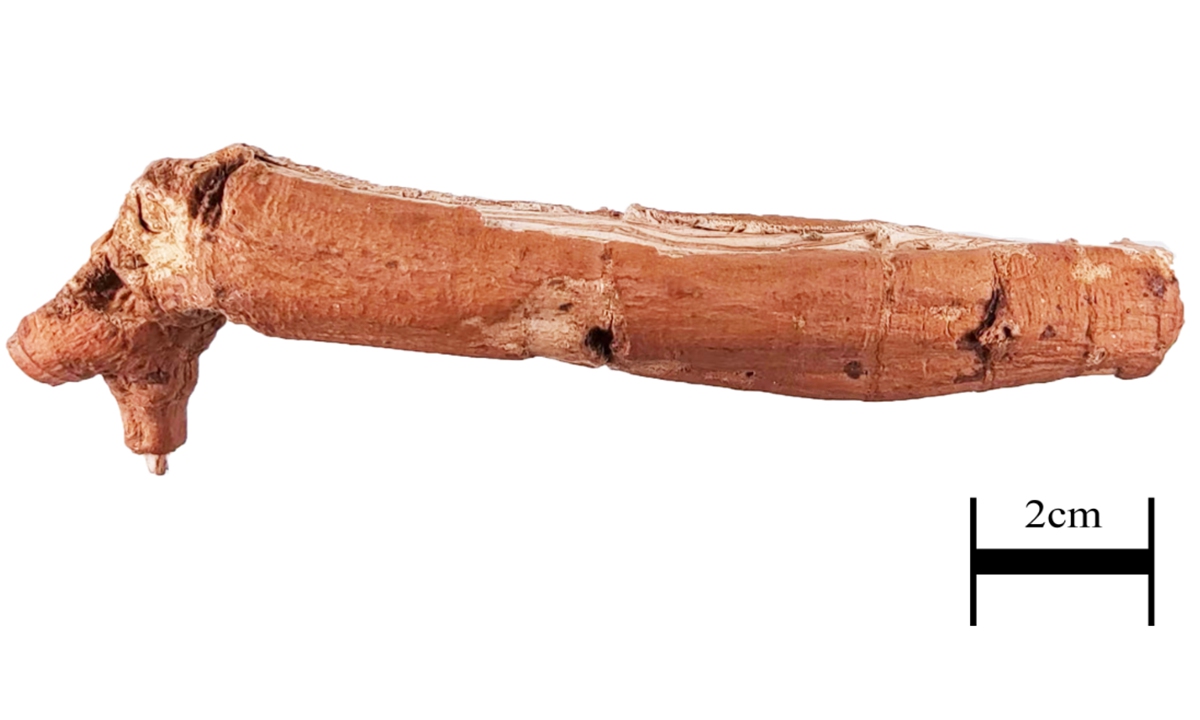
A Chinese research team has identified a new potential target to develop antidepressant drug from Qingyangshen, or Root of Auricledleaf Swallowwort, a traditional ethnic medicinal plant long used in Southwest China's Yunnan Province, according to Kunming University of Science and Technology, Science and Technology Daily reported Sunday.
The team, led by professors Xu Tianrui and Xiang Cheng from the university's School of Life Science and Technology, found that Qingyangshen glycosides, the plant's core active compound, can alleviate depression-related behaviors by simultaneously suppressing inflammation, reducing oxidative damage and stabilizing neurotransmitters in the brain.
The findings were published in the international journal Phytomedicine.
Depression has become a widespread mental health disorder globally, while existing clinical drugs fail to provide effective treatment for more than 30 percent of patients, according to the researchers. Previous studies have established a strong link between chronic inflammation and depression, but existing anti-inflammatory drugs have limited targeting capabilities, underscoring the need for new therapeutic targets and lead compounds.
Qingyangshen, a plant of the Cynanchum genus in the Apocynaceae family, has long been used as a traditional medicine by ethnic groups including the Naxi, Yi and Bai peoples in Yunnan, mainly for treating neurological conditions such as epilepsy and neurasthenia.
The researchers systematically examined the pharmacological effects of Qingyangshen extract and its core active compound, Qingyangshen glycosides. Tests using mouse, zebrafish and fruit fly models repeatedly showed that the compound significantly improved depression-related behaviors induced by inflammation, according to the report.
To identify the compound's target, the team developed a dual-discrimination model for four subtypes of prostaglandin E2 receptors and combined it with AI-powered machine learning. The researchers screened hundreds of G protein-coupled receptors and identified the prostaglandin E2 subtype 4 receptor as the direct target of Qingyangshen glycosides.
Multiple molecular experiments confirmed that the compound binds directly to the receptor and acts as an inhibitory ligand. Further experiments involving animals with the receptor knocked out in the hippocampus showed that the antidepressant effects of Qingyangshen glycosides disappeared completely when the receptor was absent, providing the first in-vivo evidence that the receptor is essential for the compound's therapeutic effects.
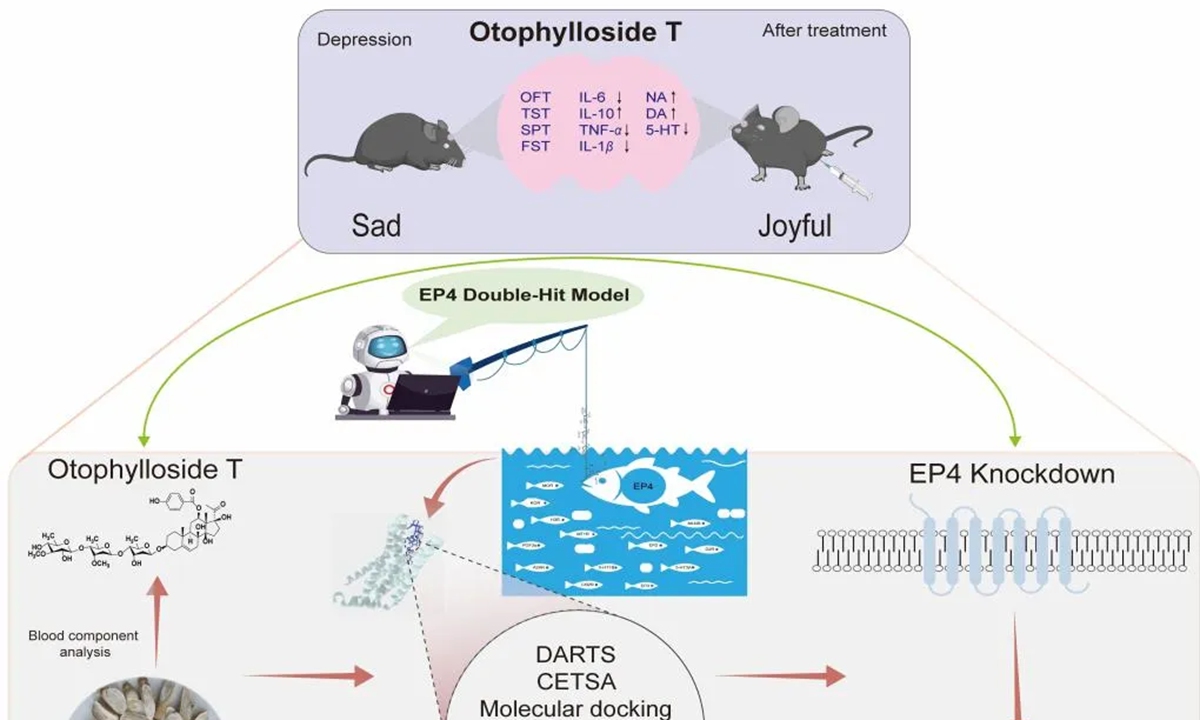
The study establishes the prostaglandin E2 subtype 4 receptor as a potential new target for antidepressant drug development and points to a new approach to treating depression through inflammatory pathways. It also identifies Qingyangshen glycosides as a potential lead compound for developing highly targeted anti-inflammatory antidepressants, creating a research chain from ethnic medicinal plants and active compounds to drug targets and new drug development.
Global Times
。 AUCKLAND, New Zealand -- Conservative former businessman Christopher Luxon will be New Zealand’s next prime minister after winning a decisive election victory Saturday.People voted for change after six years of a liberal government led for most of that time by Jacinda Ardern.The exact makeup of Luxon’s government is still to be determined as ballots continued to be counted.Luxon arrived to rapturous applause at an event in Auckland. He was joined on stage by his wife, Amanda, and their children, William and Olivia. He said he was humbled by the victory and couldn't wait to get stuck in to his new job. He thanked people from across the country.“You have reached for hope and you have voted for change,” he said.Supporters chanted his campaign slogan which promised to get the country “back on track.” Outgoing Prime Minister Chris Hipkins, who spent just nine months in the top job after taking over from Ardern in January, told supporters late Saturday he had called Luxon to concede.Hipkins said it wasn’t the result he wanted.“But I want you to be proud of what we achieved over the last six years,” he told supporters at an event in Wellington.Ardern unexpectedly stepped down as prime minister in January, saying she no longer had “enough in the tank” to do the job justice. She won the last election in a landslide, but her popularity waned as people got tired of COVID-19 restrictions and inflation threatened the economy.Her departure left Hipkins, 45, to take over as leader. He had previously served as education minister and led the response to the coronavirus pandemic. With most of the vote counted, Luxon’s National Party had about 40% of the vote. Under New Zealand’s proportional voting system, Luxon, 53, is expected to form an alliance with the libertarian ACT Party. Meanwhile, the Labour Party that Hipkins leads was getting only a little over 25% of the vote — about half the proportion it got in the last election under Ardern.And in a result that would be particularly stinging for Labour should it lose the seat, National was in a tight race for Ardern’s old electorate seat, Mount Albert. The seat has long been a Labour stronghold and was also held by another former Labour prime minister, Helen Clark. The National Party candidate for the seat, Melissa Lee, told The Associated Press she was feeling excited but also nervous about the final result in Mount Albert.“It’s been Labour since 1946. It has been the biggest, safest Labour seat forever,” she said. “It would be fantastic if we won it.” Lee said that when she was door-knocking, people had told her they were tired of the current government and were concerned with the state of the economy and the spiraling cost of living. David Farrar, a longtime conservative pollster, said there was still a good chance that Labour would end up holding the seat once all the votes were counted. However, he said, his initial impression of voting throughout the country was that it was turning out to be a “bloodbath” for the left. Luxon has promised tax cuts for middle-income earners and a crackdown on crime. Hipkins had promised free dental care for people younger than 30 and the removal of sales taxes on fruit and vegetables.Also at stake in the election is the government’s relationship with Indigenous Māori. Luxon has promised to axe the Māori Health Authority, which he says creates two separate health systems. Hipkins says he’s proud of such co-governance efforts and has accused Luxon of condoning racism.Within days of taking the reins in January, Hipkins found himself dealing with a crisis after deadly floods and then a cyclone hit New Zealand. He quickly jettisoned some of Ardern’s more contentious policies and promised a “back to basics” approach focused on tackling the spiraling cost of living. Warm spring weather in the largest city, Auckland, seemed to encourage voters, with queues forming outside some polling places. Early voting before Election Day was lower than in recent elections.During a six-week election campaign, both Hipkins and Luxon traveled the country and hammed it up for the cameras. Earlier in the week, Luxon, who served as chief executive of both Unilever Canada and Air New Zealand, told an energized crowd in Wellington that he would crack down on gangs.“I’ve gotta tell you, crime is out of control in this country,” Luxon said. “And we are going to restore law and order, and we are going to restore personal responsibility.”Luxon also got cheers when he promised to fix the capital’s gridlocked traffic with a new tunnel project.Luxon is relatively new to politics but held his own against the more experienced Hipkins during televised debates, according to political observers. But Luxon also made some gaffes, such as when he was asked in a 1News debate how much he spent each week on food.His answer of “about sixty bucks” (U.S. $36) was ridiculed on social media as showing he was out of touch with the cost of living. ___Follow AP’s Asia-Pacific coverage at https://apnews.com/hub/asia-pacific。

B |
Current article:http://aqb418p.zongchaeiwengshuabaisisuofu.sbs/news/20260826_3143521.html
Published on:11:59:53