
文化大观园
Chinese teenagers flock to tech frontline to touch the future amid AI study-tour boom_我的网站

一 |
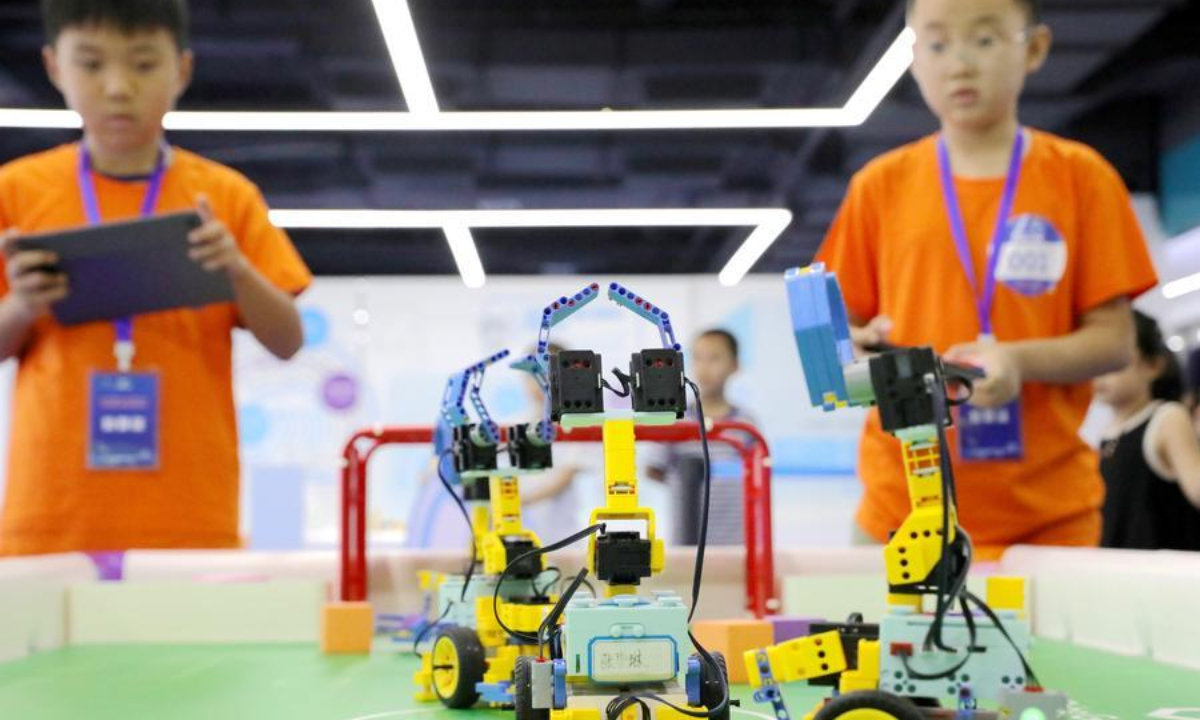
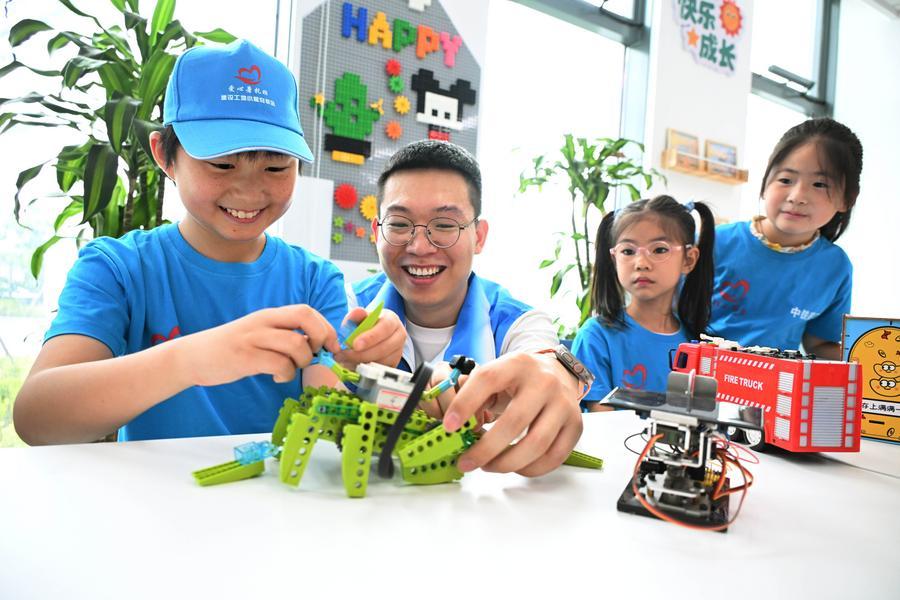
At a nearby workbench, nine-year-old Zhang Qihang was busy assembling a robot of his own. "Building robots is awesome! I can let my imagination run wild," he said, beaming with excitement.
This was the scene at an artificial intelligence (AI) summer camp -- part of a new wave of study tours gaining traction across China. Moving beyond textbooks, students are flocking to tech giants, university labs and science centers, eager to get hands-on experience with cutting-edge AI technologies and see firsthand how the future is taking shape.
AI STUDY-TOUR BOOM
During this summer vacation, AI-themed study tours have begun to gain ground, with bookings surging 370 percent year on year, according to online travel platform Ctrip.
To tap into the growing demand for AI-focused tech tourism, a travel agency based in Nanjing, east China's Jiangsu Province, began adding visits to technology companies to its trip programs last summer. "On our Shanghai-Hangzhou independent study tours, AI-related activities now account for more than 80 percent of the itinerary," founder Zhu Ping said.
The boom is unfolding against the backdrop of China's broader AI boom, powered by a wave of homegrown models and applications. For a growing number of Chinese teenagers, AI tools such as DeepSeek, Kimi and Doubao are becoming familiar companions in their everyday lives.
The number of AI enterprises in China had surpassed 6,000 last year, and the output value of the core AI industry was projected to exceed 1.2 trillion yuan (about 177 billion U.S. dollars) during the same period, representing a year-on-year increase of nearly 30 percent.
Moreover, China was home to more than 140 humanoid robot developers in 2025, with shipments reaching 14,400 units -- accounting for 84.7 percent of the global market, according to an industry research report.
To help children prepare for an AI-driven future, China unveiled an "AI Plus Education" initiative earlier this year, encouraging schools to take AI learning beyond the classroom through after-school programs and hands-on activities. The goal is to help students understand and use AI properly, while sparking curiosity, nurturing creativity and honing their critical-thinking and problem-solving skills.
Today, the AI study-tour wave is sweeping through China's schools, as primary and secondary schools incorporate it into their educational programs. Parents are taking their children into the heart of the tech industry to see how AI transforms the real world.
China's tech-tourism boom is also drawing international visitors keen to get a close-up look at the innovation behind "Made in China."
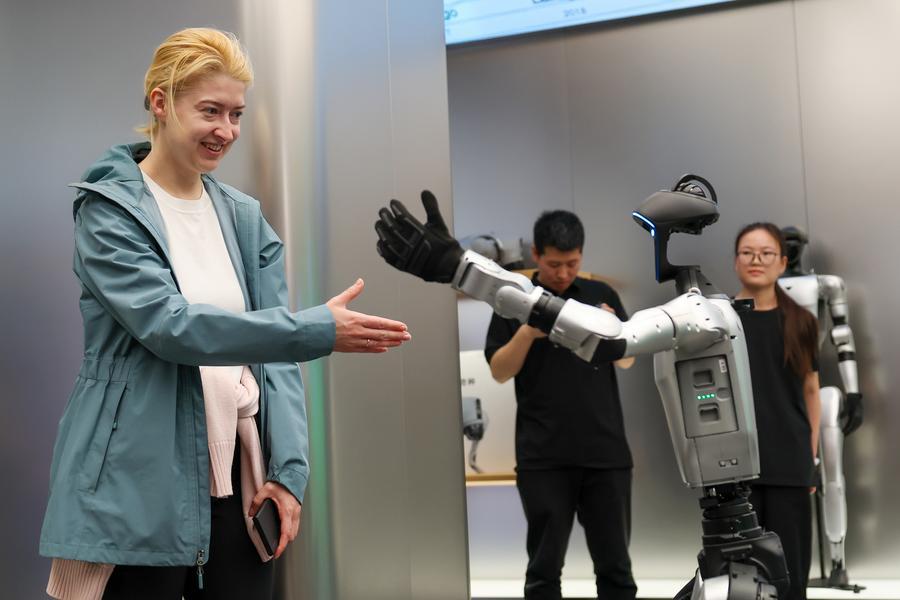
Since opening in Shanghai in May, Unitree Robotics's first embodied intelligence experience store in Asia has attracted many foreign visitors.
Victoria, from Denmark, visited the store last month. "I've seen some of the dancing videos, but it's really cool to see them in real life," she said, viewing the development of AI and robotics in China as "revolutionary, new and exciting."
FROM AI USERS TO AI CREATORS
Today's children are growing up as AI natives, already fluent in AI tools. But AI study camps are opening a new window onto how the technology is reshaping the world around them and how they can use it to make a difference.
For Liang Yiduo, a Beijing middle school student, an AI summer camp run by internet giant NetEase offered a fresh perspective on the AI technology he thought he already knew.
"I realized that large language models aren't just chatbots or simple tools," he said. "They can be assistants that work alongside you and help you create things tailored to your needs, like 'claws.'"
"The goal of the study camp is to help children move from simply using AI to understanding it, creating with it and even building their own AI agents," said Wang Lijin, director and founder of Beijing Venus Future Education Consulting Center, which assists NetEase in running its study camps.
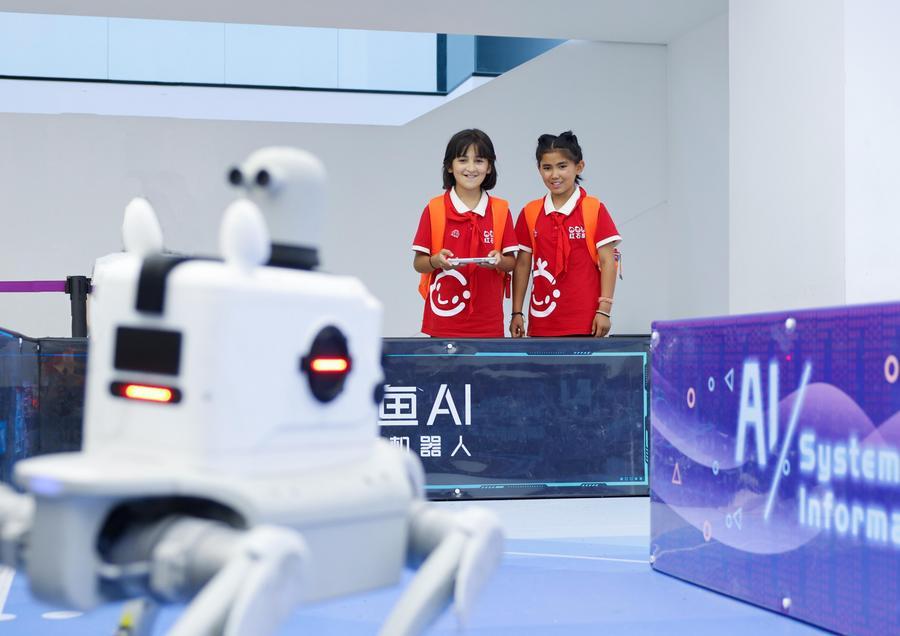
Some study tour organizers design programs around students' interests and abilities, aiming to spark curiosity and encourage deeper thinking.
Shanghai Qingbao Robot Co., Ltd., for example, offers students who enjoy building things the chance to assemble robotic arms and explore the mechanics of shoulder and neck structures. It also gives students a comparative look at the robotics and AI industries in China, the US, Europe and Japan, helping them gain a more balanced understanding of China's strengths and shortcomings.
Wang Lei, the company's chairman, believes that study tours can greatly broaden students' horizons in science and innovation. "Through immersive study tours, students start thinking for themselves about how robotics can be applied to everyday life, from unmanned retail to automated pharmacies," he said.
Some students are taking it a step further, learning to spot real-world problems and use AI to develop solutions.
In the southern Chinese city of Shenzhen, a group of students spent six days in a camp turning ideas into an AI-powered product.
"I've realized that learning AI isn't about showing off what I can do with it, but about using it to solve real problems for others," said one team member. "I want to keep learning AI so I can help more people in the future."
。 디지털 엑스 이어 코인원도 전 종목 수수료 무료화 서울 빗썸라운지 강남본점의 모습. [연합뉴스]비트코인 가격이 석 달여 만에 8만 달러를 돌파하는 등 상승 랠리가 이어지며 원화 가상자산 거래소의 수수료 경쟁이 본격화 하는 모습이다.26일 가상자산업계에 따르면 코인원은 이날 오전 11시부터 별도 공시 전까지 전 종목 대상으로 거래 수수료율을 0% 적용한다고 밝혔다.코인원 웹이나 애플리케이션에서 바우처를 발급받으면 30일간 무료 혜택이 적용되며, 자격이나 횟수 제한 없이 바우처를 재발급받을 수 있다.코인원 측은 지난 21일부터 오픈 응용 프로그램 인터페이스(Open) 거래 수수료를 무료화하고 있는 만큼, 일부 서비스를 제외하면 사실상 모든 거래 유형의 수수료가 무료라고 설명했다.5대 원화거래소(업비트·빗썸·코인원·코빗·고팍스) 중 수수료 무료화 정책을 먼저 시행한 건 코빗을 운영하는 디지털엑스다.디지털엑스는 이달 24일 오전 9시부터 내년 8월 24일 오전 9시까지 1년간 코빗 원화마켓의 모든 종목에 대한 거래 수수료를 받지 않기로 했다.거래 수수료는 거래소의 사실상 유일한 수익 모델인 점을 감안하면, 고객 유치를 위한 출혈 경쟁이 본격화하고 있다는 평가다.업비트와 빗썸의 원화마켓 거래 수수료(일반 주문) 각각 0.05%, 0.04%(쿠폰 적용 시)이며, 고팍스는 0.2%다.원화 거래소의 수수료 경쟁은 최근 비트코인 가격이 급반등하며 본격화 하고 있다. 전날 비트코인 가격은 8만달러에 진입했다. 비트코인 가격이 8만달러를 웃돈 것은 지난 5월13일 이후 석 달여 만이다.비트코인은 6만4000달러 박스권을 오가다가 이달 19일 이후 미국의 10∼30년 만기 국채 바이백(재매입) 소식과 제도 개선 기대감 등이 반영되면서 단기간 급등했다.한편, 가상자산 정보업체 코인마켓캡에 따르면 이날 오전 11시 7분 현재 비트코인 가격은 24시간 전 보다 1.25% 하락한 7만8770달러에 거래되고 있다.。
Current article:http://aqb418p.zongchaeiwengshuabaisisuofu.sbs/news/20260826_4615.html
Published on:19:57:52
致命魔术_Random reading
- 08-22Taiwan regional travelers with so-called ‘passports’ denied entry to Uganda; mainland expert says separatist pursuits keep narrowing island’s international space
- 08-20Salman Khan Says He Hasn’t Gone Out for Dinner in 25 Years at The Red Sea Film Festival
- 08-20백운광장 지하차도 완공 12월 전망…'설비 발주 지연'
- 08-26倒计时1天!福建好物已就位,只等你来!
- 08-24Exclusive: Sriram Raghavan calls Dharmendra’s death “a deeply personal loss” ahead of Ikkis release.
- 08-25特雷-曼恩奇才将穿1号 此前属于离队的惠特摩尔
- 08-20宁德时代20家电池工厂实现零碳
- 08-20CCI issues cease and desist order against firms found guilty of bid rigging, cartelization
- 08-26中果网:嘎啦收尾早富士上色不快
- 08-23阿斯:迪奥曼德对皇家社会肯定会出场,但能否首发尚存疑问

妒海_Active users
- 2025年五大联赛中保持联赛不败的球队:巴萨、罗马、大巴黎
- 抚顺大官窑邀请展即将启幕 倒计时1天!“瓷”韵悠长
- 500개 직업군 분석했더니…‘암 사망률’ 1위는 승무원?
- 이란·오만, 호르무즈 공동항로 개설 합의
- “倾听科学空间”亮相泰国 中泰科普合作升级
- 【期股联动】低硫燃油主力暴跌超8%!美伊停火曙光重挫国际油价逾4%
- 向新逐梦写情怀
- 【一线经济观察】河北:以赛引流 以景留客 激活消费新活力
- 三星S10支持超声波屏幕外指纹,但不能粘贴胶片
- 开户佣金问清楚这三点不吃亏:全佣净佣和规费到底谁承担
- 万亩杏林舞春风
- 近期货车肇事事故多发,公安部交管局发布安全提示
- 中型SUV/配置调整 新款奇瑞瑞虎8L/瑞虎8PLUS将于6月28日上市
- 以色列频繁袭击叙利亚,土耳其寻求对以总理内塔尼亚胡发布“红色通缉令”,以色列:无意升级冲突,绝不接受土耳其在叙利亚建立基地
- 若快船遭重罚会进仲裁程序 小卡坚信会在9月结束
- 漳州市人大常委会党组及机关党组(扩大)会议召开
- ATP最新排名:兹维列夫重回世界第二、鲁内重返前十
- 茅台回应“县级市场自营店招商”:“开店门槛30万元”“总部给予50万元装修补贴”均是虚假诈骗信息
林中小屋_Hottest this week
- 08-20生态环境部自然生态保护司有关负责人就《生态保护“十五五”规划》答记者问
- 08-26班主任为51个娃设53个班干部岗位,网友看后怒赞!|中国交通新闻_服务_陈女士
- 08-26PriceSeek提醒:陕煤榆林化学聚酯级乙二醇出厂价下调200元/吨
- 08-25省媒看抚顺丨年发电30亿千瓦时,年纳税超亿!辽宁“超级充电宝”明年初满格供电
- 08-20免费!抚顺这个占地1000平方米的停车场投用,地址就在→
- 08-25创业板权限开通2026新规|新老用户条件、办理流程与常见问题
- 08-25Man rescued after saving dog in Fuzhou floods
- 08-23Dialogue seeks tangible results in Sino-U.S. ties
- 文化大观园 copyright
- Some of the content comes from the Internet. If you have any offence, please raise it.