
我爱我家
A clown, an apple, and 6 million likes: Chinese acrobatics finds a new generation_我的网站

一 |
原标题:突发!这两国再起冲突,外媒:整条边境线都在开火据央视新闻援引俄罗斯卫星通讯社和《耶路撒冷邮报》报道,当地时间12日晚至13日凌晨,阿塞拜疆和亚美尼亚边境发生冲突,双方互相指责对方挑起冲突。阿塞拜疆国防部当地时间13日凌晨表示,亚美尼亚军队12日夜间在阿塞拜疆军队阵地附近进行挑衅破坏行动,造成阿方人员伤亡。亚美尼亚国防部发言人当地时间13日表示,截至当天凌晨4时,亚美尼亚与阿塞拜疆边境的局势仍然非常紧张,阿塞拜疆方面对亚美尼亚的军事和民用基础设施发起攻击。 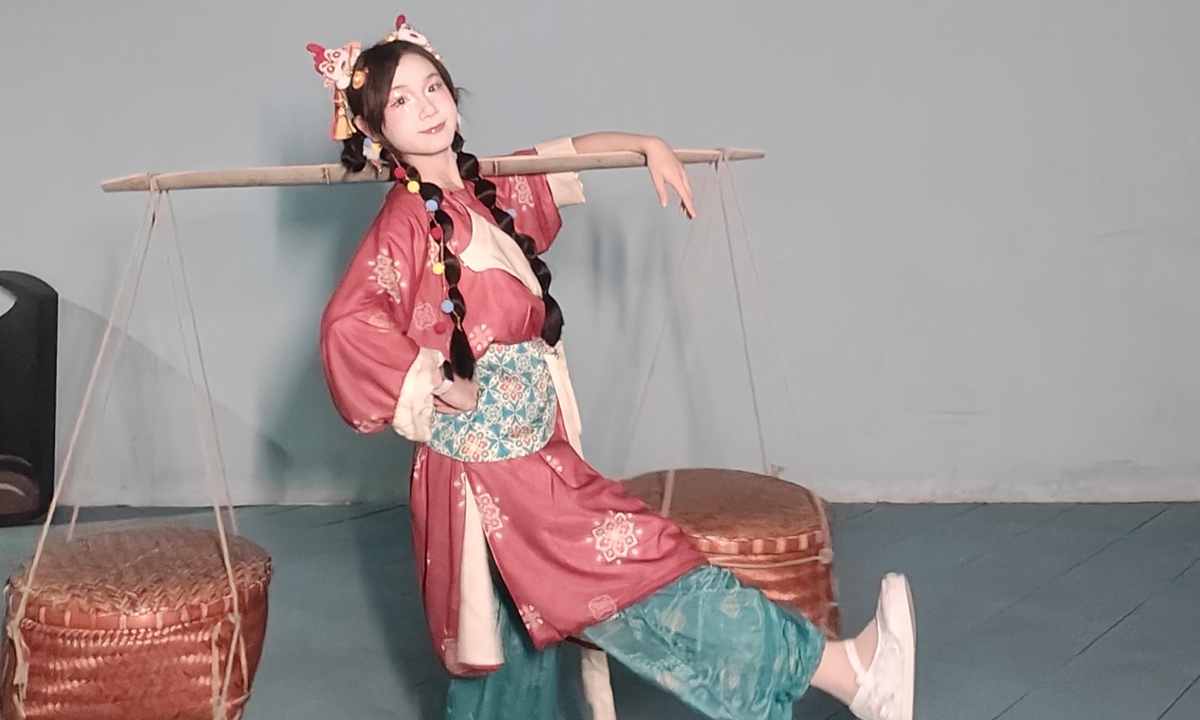
Bing Bing, a young acrobat born in the 2000s, told the Global Times that she first tested the "tossing and eating an apple" routine through short videos before taking it to the stage. After her first performance, she spent the holidays performing it, adjusting the movements and pacing based on how audiences responded.
"Performance is the hardest thing to master. Your facial expressions and body movements have to convey to the audience what you are doing and what you want to do," she said. "The goal is to make them know that you are performing, yet still find it entertaining."
According to Bing Bing, the training behind such performances is far less glamorous than the finished act suggests. "Training is very repetitive. You fail, repeat, fail again, succeed and then fail again," she said. "Practice is what turns quantity into quality, even facial expressions and body movements require deliberate practice."
For Bing Bing, however, mastering the routine is only one part of the job. Once performers step in front of an audience, the carefully rehearsed movements have to adapt to a live and unpredictable setting.
Beyond the theater
In recent years, acrobatic performances have increasingly moved into aquariums, theme parks and cultural tourism venues, where audiences themselves become part of the performance rather than simply watching from fixed seats.
Bing Bing previously performed alongside other clowns at an aquarium, inviting visitors to participate in the act. She said the difference is not merely a change of venue: performers have to constantly interact with the people in front of them.
"Traditional stages are farther away from the audience and are better suited to performances that people simply watch," she said. "Aquariums and theme parks, however, place greater emphasis on interaction and connection with the audience. Even with the same routine and interactions, you can often get unexpected results."
That interaction also changes how performers think about rhythm and presentation. A routine that works in a theater cannot necessarily be transferred unchanged to a tourist attraction, where audience reactions, distance and participation can all alter what happens on stage.
Sun Dawei, head of the Wuqiao Acrobatic School, told the Global Times that this shift is also changing the industry's approach to production.
"Acrobatics used to focus mainly on showcasing skills. Now there is greater emphasis on story-telling and emotional expression," he said. "Performances are no longer confined to theaters, but are increasingly staged as resident shows at cultural tourism venues."
According to Sun, a production usually begins with a theme, followed by the selection of appropriate skills. Performers then refine the routine repeatedly before adding music and stage design and going through multiple rehearsals.
"Traditional signature skills and core fundamentals must be preserved," he said. "Content that simply pursues danger or no longer fits contemporary aesthetics needs to be repackaged. Traditional skills should be given new forms of expression while retaining their roots and appealing to modern audiences."
For Bing Bing, this shift has also been made possible thanks to short-video platforms. Her apple routine gained its first wide exposure online before audiences encountered it in person.
"Short videos have helped more people learn about Chinese acrobatics and traditional culture, and encouraged more people to go to theaters and watch performances offline," she said.
The growing visibility of acrobatics online, however, has raised another question: once traditional skills enter new venues and digital platforms, how can performers avoid simply repeating familiar formulas?
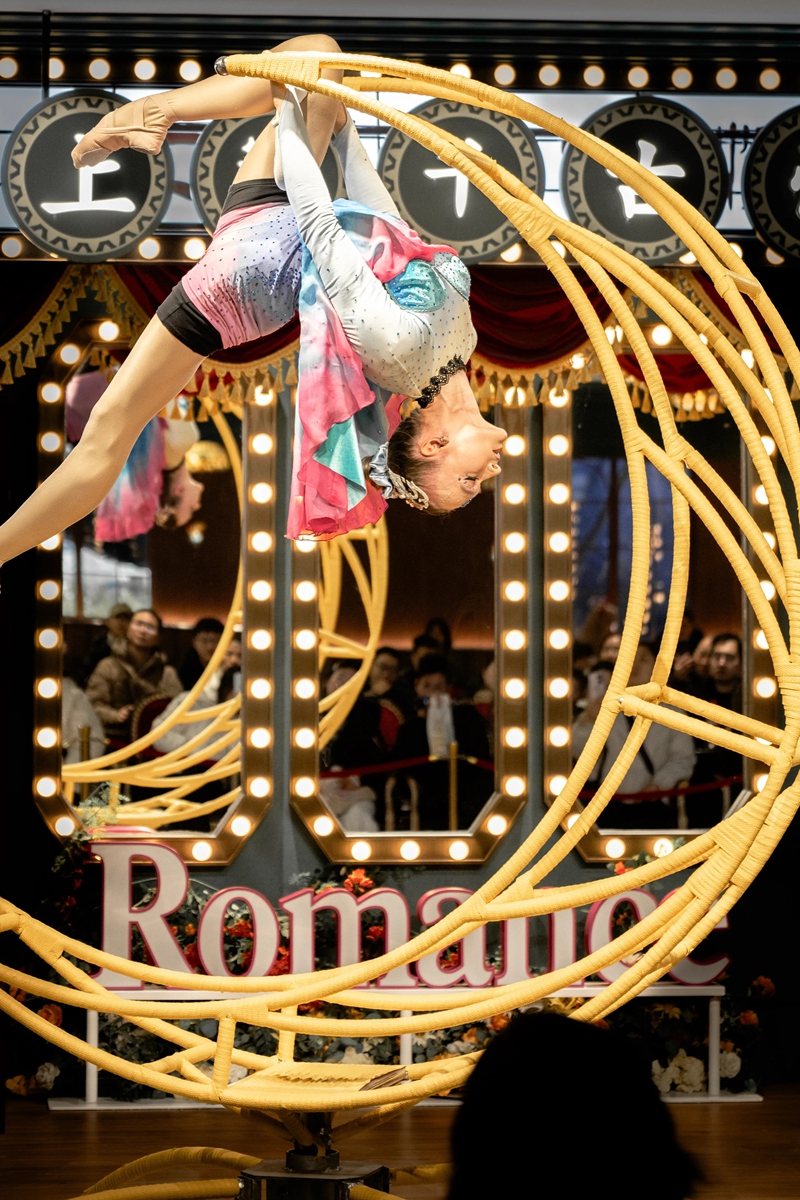
Russian aerial acrobat Liza, who has lived and worked in China for more than seven years and now performs regularly at Shanghai Qianguqing, a large-scale cultural tourism attraction featuring live performances, noted that the answer lies in how a show is constructed as a whole.
"A performance should start with an overall concept, and then you choose the props and music around it. Music itself can guide the choice of movements, provided the performer already has a solid technical foundation," Liza told the Global Times. "The transitions between movements have to be natural and smooth, like telling a story step by step. Costumes are also important because they complete the character. Everything needs to work together."
For Liza, technical difficulty should serve the performance rather than become the performance itself.
"Real professionalism means making the audience unable to see how hard you are working. Everything should look effortless," she said. "I value beauty and precision in movement. You should not make things more complicated simply to show off your skills. You should improve steadily as you grow as a performer, rather than constantly chasing greater difficulty."
She said that this is particularly important as increasingly extreme acts, including hair- and tooth-hanging, attract attention online.
"Most performers are following established templates, and I rarely see people creating something that is truly their own," Liza said. "You can find your own style and way of expression without taking excessive risks."
From an apple-tossing routine that drew more than 6 million likes to performances in aquariums and cultural tourism venues, traditional acrobatics is finding new ways to reach audiences. But bringing an old art back into the spotlight is not simply about making tricks harder or more spectacular. As Bing Bing's apple routine shows, sometimes it takes a familiar skill presented in an unfamiliar way to make a new generation stop and watch again.
。
。Bing Bing, a young acrobat born in the 2000s, told the Global Times that she first tested the "tossing and eating an apple" routine through short videos before taking it to the stage. After her first performance, she spent the holidays performing it, adjusting the movements and pacing based on how audiences responded.
"Performance is the hardest thing to master. Your facial expressions and body movements have to convey to the audience what you are doing and what you want to do," she said. "The goal is to make them know that you are performing, yet still find it entertaining."
According to Bing Bing, the training behind such performances is far less glamorous than the finished act suggests. "Training is very repetitive. You fail, repeat, fail again, succeed and then fail again," she said. "Practice is what turns quantity into quality, even facial expressions and body movements require deliberate practice."
For Bing Bing, however, mastering the routine is only one part of the job. Once performers step in front of an audience, the carefully rehearsed movements have to adapt to a live and unpredictable setting.
Beyond the theater
In recent years, acrobatic performances have increasingly moved into aquariums, theme parks and cultural tourism venues, where audiences themselves become part of the performance rather than simply watching from fixed seats.
Bing Bing previously performed alongside other clowns at an aquarium, inviting visitors to participate in the act. She said the difference is not merely a change of venue: performers have to constantly interact with the people in front of them.
"Traditional stages are farther away from the audience and are better suited to performances that people simply watch," she said. "Aquariums and theme parks, however, place greater emphasis on interaction and connection with the audience. Even with the same routine and interactions, you can often get unexpected results."
That interaction also changes how performers think about rhythm and presentation. A routine that works in a theater cannot necessarily be transferred unchanged to a tourist attraction, where audience reactions, distance and participation can all alter what happens on stage.
Sun Dawei, head of the Wuqiao Acrobatic School, told the Global Times that this shift is also changing the industry's approach to production.
"Acrobatics used to focus mainly on showcasing skills. Now there is greater emphasis on story-telling and emotional expression," he said. "Performances are no longer confined to theaters, but are increasingly staged as resident shows at cultural tourism venues."
According to Sun, a production usually begins with a theme, followed by the selection of appropriate skills. Performers then refine the routine repeatedly before adding music and stage design and going through multiple rehearsals.
"Traditional signature skills and core fundamentals must be preserved," he said. "Content that simply pursues danger or no longer fits contemporary aesthetics needs to be repackaged. Traditional skills should be given new forms of expression while retaining their roots and appealing to modern audiences."
For Bing Bing, this shift has also been made possible thanks to short-video platforms. Her apple routine gained its first wide exposure online before audiences encountered it in person.
"Short videos have helped more people learn about Chinese acrobatics and traditional culture, and encouraged more people to go to theaters and watch performances offline," she said.
The growing visibility of acrobatics online, however, has raised another question: once traditional skills enter new venues and digital platforms, how can performers avoid simply repeating familiar formulas?
Russian aerial acrobat Liza, who has lived and worked in China for more than seven years and now performs regularly at Shanghai Qianguqing, a large-scale cultural tourism attraction featuring live performances, noted that the answer lies in how a show is constructed as a whole.
"A performance should start with an overall concept, and then you choose the props and music around it. Music itself can guide the choice of movements, provided the performer already has a solid technical foundation," Liza told the Global Times. "The transitions between movements have to be natural and smooth, like telling a story step by step. Costumes are also important because they complete the character. Everything needs to work together."
For Liza, technical difficulty should serve the performance rather than become the performance itself.
"Real professionalism means making the audience unable to see how hard you are working. Everything should look effortless," she said. "I value beauty and precision in movement. You should not make things more complicated simply to show off your skills. You should improve steadily as you grow as a performer, rather than constantly chasing greater difficulty."
She said that this is particularly important as increasingly extreme acts, including hair- and tooth-hanging, attract attention online.
"Most performers are following established templates, and I rarely see people creating something that is truly their own," Liza said. "You can find your own style and way of expression without taking excessive risks."
From an apple-tossing routine that drew more than 6 million likes to performances in aquariums and cultural tourism venues, traditional acrobatics is finding new ways to reach audiences. But bringing an old art back into the spotlight is not simply about making tricks harder or more spectacular. As Bing Bing's apple routine shows, sometimes it takes a familiar skill presented in an unfamiliar way to make a new generation stop and watch again.
。

二 |
据海外网援引俄罗斯塔斯社13日报道,亚美尼亚国防部表示,9月13日0时5分,阿塞拜疆武装部队使用大炮、大口径武器和轻武器向该国多个方向猛烈开火,“亚美尼亚武装部队的阵地遭到炮击。
三 | ”
亚美尼亚方面还称,阿塞拜疆使用了无人机。
四 |
对此,阿塞拜疆国防部表示,有关阿方军队开火造成民用基础设施损坏的消息是“不真实的”,并称阿塞拜疆武装部队遭到亚美尼亚陆军使用包括迫击炮在内各口径武器的猛烈炮击,导致人员伤亡,军事基础设施受损。据环球网报道,“今日俄罗斯”(RT)电视台称,这是两国之间紧张局势的又一次重大升级。RT援引于亚美尼亚当地媒体报道称,“当事两国整条边境线都在开火”。另外,据央视网新闻援引俄罗斯卫星通讯社报道,当地时间9月13日凌晨,亚美尼亚总理帕希尼扬与俄罗斯总统普京通电话,双方讨论了亚美尼亚与阿塞拜疆边境局势不断升级的问题。
五 |
报道称,帕希尼扬当天还和法国总统马克龙通了电话。苏联解体后,阿塞拜疆和亚美尼亚两国因纳卡地区归属问题爆发战争。
六 | 1994年,双方就全面停火达成协议,但两国一直因纳卡问题处于敌对状态,武装冲突时有发生。2020年9月,两国因纳卡问题爆发新一轮冲突。

七 | 同年11月9日,俄罗斯、阿塞拜疆和亚美尼亚三国领导人签署声明,宣布纳卡地区从莫斯科时间10日零时起全面停火。根据该声明,俄罗斯在纳卡地区部署维和人员。
编辑|何小桃 杜波校对|王月龙每日经济新闻综合央视新闻、海外网、环球网返回搜狐,查看更多责任编辑:Current article:http://aqb418p.zongchaeiwengshuabaisisuofu.sbs/news/20260826_82578.html
Published on:18:15:53
春风十里不如你_Random reading
- 08-21五载深耕惠民生 钱塘奋楫促发展
- 08-26巴莱巴:小时候我的偶像是博格巴 B费是顶级球星我想向他学习
- 08-26Ranbir Kapoor Halts Ramayana Shoot to Film Love & War?
- 08-23上半年锂矿企业业绩普遍向好
- 08-23抚顺医保最新发布!恢复申领→
- 08-22今年前7个月山东经济运行总体平稳,新增就业80.0万人
- 08-25从“林肯”号航母乱象,岛内看清了美军
- 08-25Exhibits and collectors editions mark 400th anniversary of Shakespeare's First Folio
- 08-20行有所感 少年云端对决 童声点燃西站
- 08-25后驱/四驱可选 5座中大型SUV/将于9月上市 理想i6申报信息曝光

猩球崛起_Active users
- 【安全】共筑平安校园防线,守护成长每一步
- 休闲手游融合合成玩法:从放松到养成的破局之道
- $5,000 grew into a forest: American donor returns to China to reunite with desert reclamation partner
- S10就要来了!三星正式宣布银河新产品发布将于2月21日举行。
- 新疆现如今的奇幻现象“寒夜灯柱”:极光之美
- 坎宁安大夸科林斯兼具投射与硬度 适配活塞体系
- 特发信息:2026年半年度净利润6206.67万元,同比增长1007.52%
- D23加长版预告片引发粉丝热捧,王国之心2.8:终章高清版 成为美国 Steam 销量榜第二。
- 一加预热海外新机N6x:直角边框配胶囊形相机模组
- 索尼A6400无反转相机版本:实时对焦和实时跟踪,最快的对焦系统
- 政和县:一溪碧水送清凉
- SL paddy stocks disappear
- 全国天气预报:未来三天江南华南强降雨和强对流天气持续
- 超百万人预约!华为Mate50系列预售火爆,上京东参与可持续计划_影像_超微距
- 山东省气象台继续发布高温黄色预警,预计26日仍将出现高温天气!青岛最新预报→
- 从震动硅谷到喊话马斯克“欢迎掰手腕”,Kimi做对了哪些
- 订票1小时退票扣90%引热议!机票退改新标准计划年内出台:东航已率先调整
- 上半年亏损或四千万 爱丽家居凭什么13天12板?
相约星期六_Hottest this week
- 08-22China's pharmaceutical industry sees accelerated innovation breakthroughs in H1
- 08-23中国跳水队本届世锦赛第8金:陈芋汐+全红婵=冠军
- 08-24这次真不一样!《NBA2K27》大刀阔斧到底改了啥
- 08-2496岁二战英雄被邻居囚禁15年,养老金被夺走212万!
- 08-20企业差旅及团体出行怎么挑选机票代理
- 08-225.2 magnitude earthquake in Nepal damages dozens of homes and causes a landslide
- 08-22克莱谈身体状态:依旧可以在高水平竞争 会积极备战适应球队体系
- 08-24全球共振,压力期持续到何时?
- 我爱我家 copyright
- Some of the content comes from the Internet. If you have any offence, please raise it.